
Key statistics
Satellite KOYOH at a glance.
Uptime
748
Days in orbit
Revolutions
≈ 15.2
Per day
Orbit
SSO
Sun Synchronous Orbit
Inclination
97.6
Latest
Satellite identification and parameters
Extended collection of information and parameters for KOYOH.
Object identification
Identified? True
Debris? False
Object name: KOYOH
International designator: 2023-185C
Object number (NORAD): 58464
Object ID (CCSDS): 58464
Country: JAPAN (JPN)
Current information (Y/N): Y
RCS size: MEDIUM
Orbital parameters
Period: 95.012 minutes
Inclination: 97.5555 deg
SMA: 6897.299 km
Apoapsis: 523.699 km
Periapsis: 514.628 km
RAAN: 60.1188 deg
Eccentricy: 0.00065759
Argument of periapsis: 205.3962 deg
Mean anomaly: 154.6948 deg
Mean motion: 15.15598586 rev/day
Mean motion (dot): 0.00005119 rev/day2
B* drag term: 0.00027297093 1/REarth
Two-line elements (TLE)
Creation date: Dec. 18, 2025, 2:19 a.m.
Reference frame: TEME
Reference center: EARTH
Epoch: Dec. 17, 2025, 11:17 p.m. UTC
TLE line 0: 0 KOYOH
TLE line 1: 1 58464U 23185C 25351.97046981 .00005119 00000-0 27297-3 0 9992
TLE line 2: 2 58464 97.5555 60.1188 0006576 205.3962 154.6948 15.15598586112655
Live tracking on map
Real-time ground track for satellite KOYOH.
In-orbit conjunctions
There are no conjunctions computed for KOYOH, at the moment. Check back to stay up to date, as we update our databases every day.
Go to all conjunctionsAssociated space launch
Note: Name of payload is provisional. First launch of an ultimately 5 reconnaissance satellites for the South Korean Defense Acquisition Program Administration (DAPA), with 1 satellite featuring an electro-optical infrared (EO/IR) telescope. The other 4 synthetic aperture radar (SAR) satellites are to be launched at a later date. They will be launched to low Earth orbit between 600 and 700 km by 2025, enabling South Korea’s military to observe the nuclear-armed neighbor’s key military facilities every two hours with 30-50 centimeters resolution imagery, according to a 2019 report produced by the Korea Institute of S&T Evaluation and Planning. The project is lead by the Korean Agency for Defense Development (ADD) and Korea Aerospace Research Institute (KARI), with input from Korea Aerospace Industries (KAI), Hanwha Systems and Thales Alenia Space. ESA's EIRSAT-1 is also onboard as a rideshare passenger. This 2U cubesat carries three experiments, including a novel gamma ray detector to study some of the most luminous explosions in the universe.
KOYOH was lifted into orbit during the mission ‘Falcon 9 Block 5 | 425 Project Flight 1 & rideshare’, on board a Falcon 9 space rocket.
The launch took place on Dec. 1, 2023, 6:19 p.m. from Space Launch Complex 4E.
For more information about the launch, click the button.
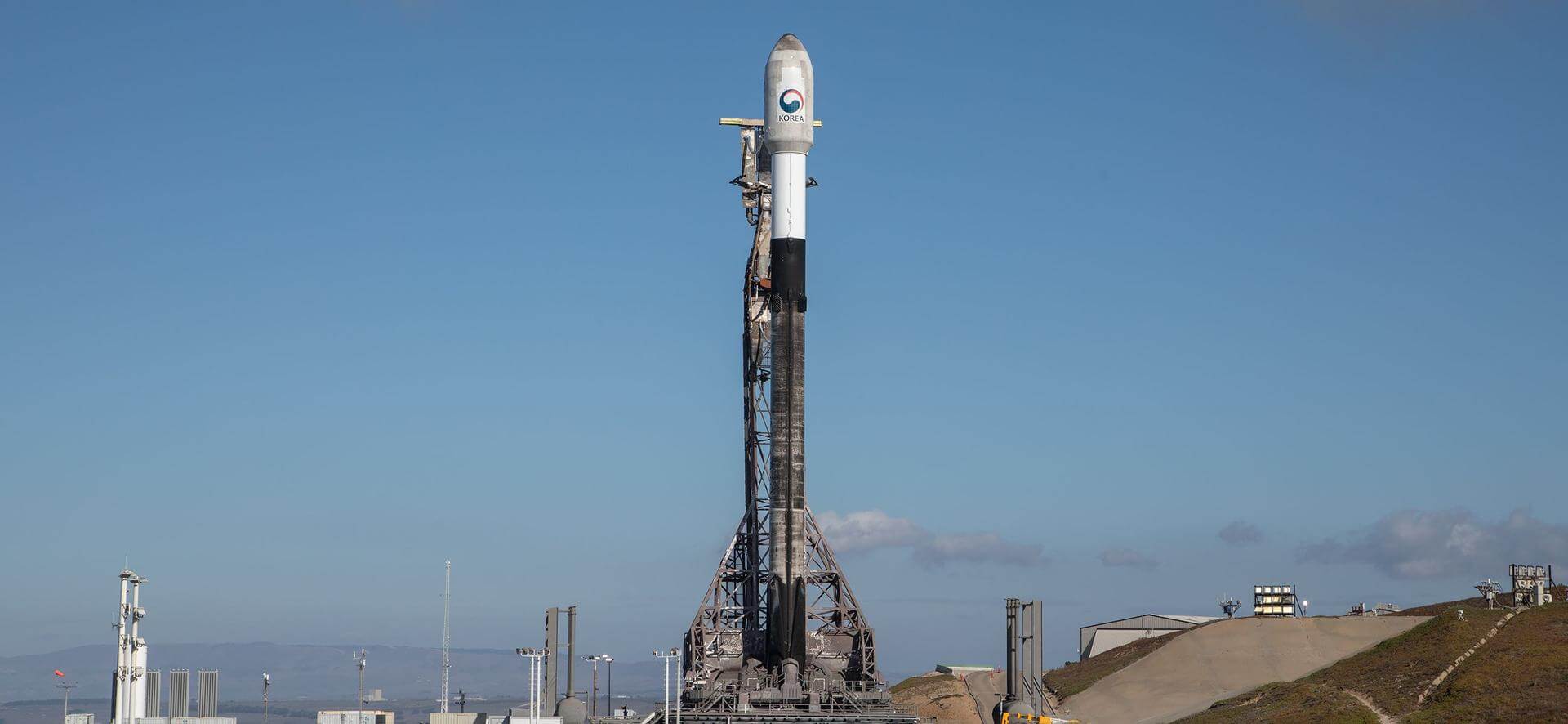
Falcon 9 Block 5 | 425 Project Flight 1 & rideshare
Agency: N/A
Status: Launch Successful
Launch date: Dec. 1, 2023, 6:19 p.m. UTC
Rocket: Falcon 9
Launch pad: Space Launch Complex 4E
Location: Vandenberg SFB, CA, USA
...
Latest news about this satellite

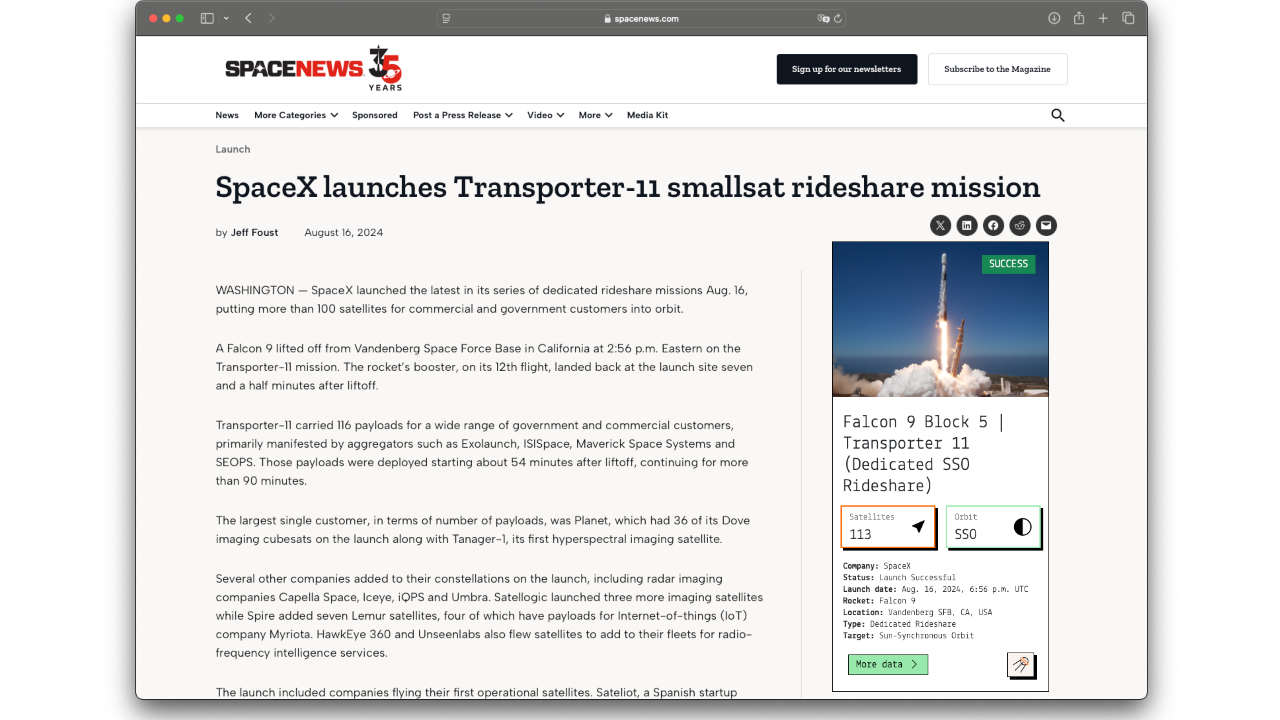
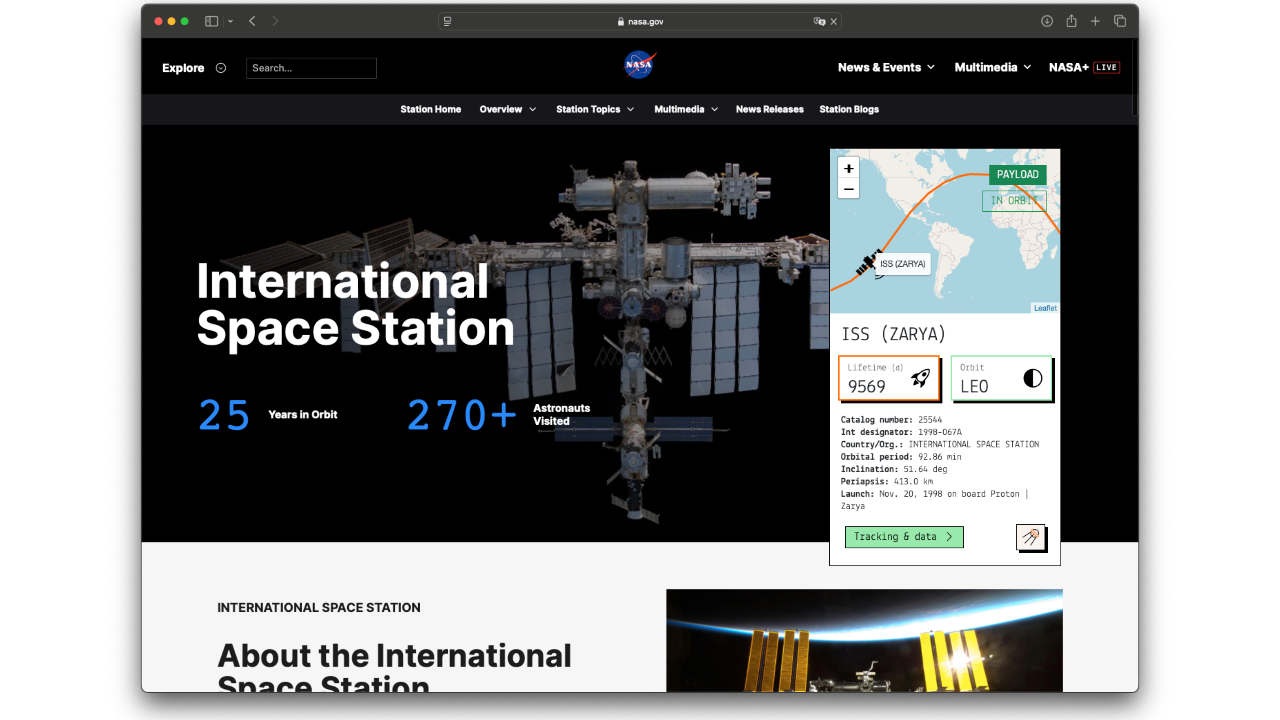
Launch Roundup: Soyuz resupplies the ISS; SpaceX launches more Starlink satellites
This week, SpaceX continued its incredible launch cadence with two more launches of Falcon 9, a Soyuz 2.1a resupplied the International Space Station (ISS), and three missions launched consecutively out of China.

Newsletter sign-up
Weekly statistics, charts and insights to help you stay on top of the space industry.
